
Plastic Pellets Explained
Very small and nearly indestructible, plastic resin pellets (also known as “nurdles”) are the raw material for almost every plastic product. They’re also very dangerous.
Small Enough to Miss. Big Enough to Matter.
Plastic resin pellets are small granules of raw plastic material, the industrial feedstock from which virtually every plastic product in the world is manufactured. They are typically cylindrical or lentil-shaped and measure approximately 2–5 millimeters in diameter, roughly comparable in size to a lentil or a small pea. In manufacturing circles, they are simply called “resin pellets” or “plastic pellets.” In environmental discussions, they are increasingly referred to by the colloquial name “nurdles.”
Plastic pellets are produced by resin manufacturers—companies that polymerize raw chemical feedstocks into specific plastic compounds, then extrude and cut those compounds into uniform pellet form.
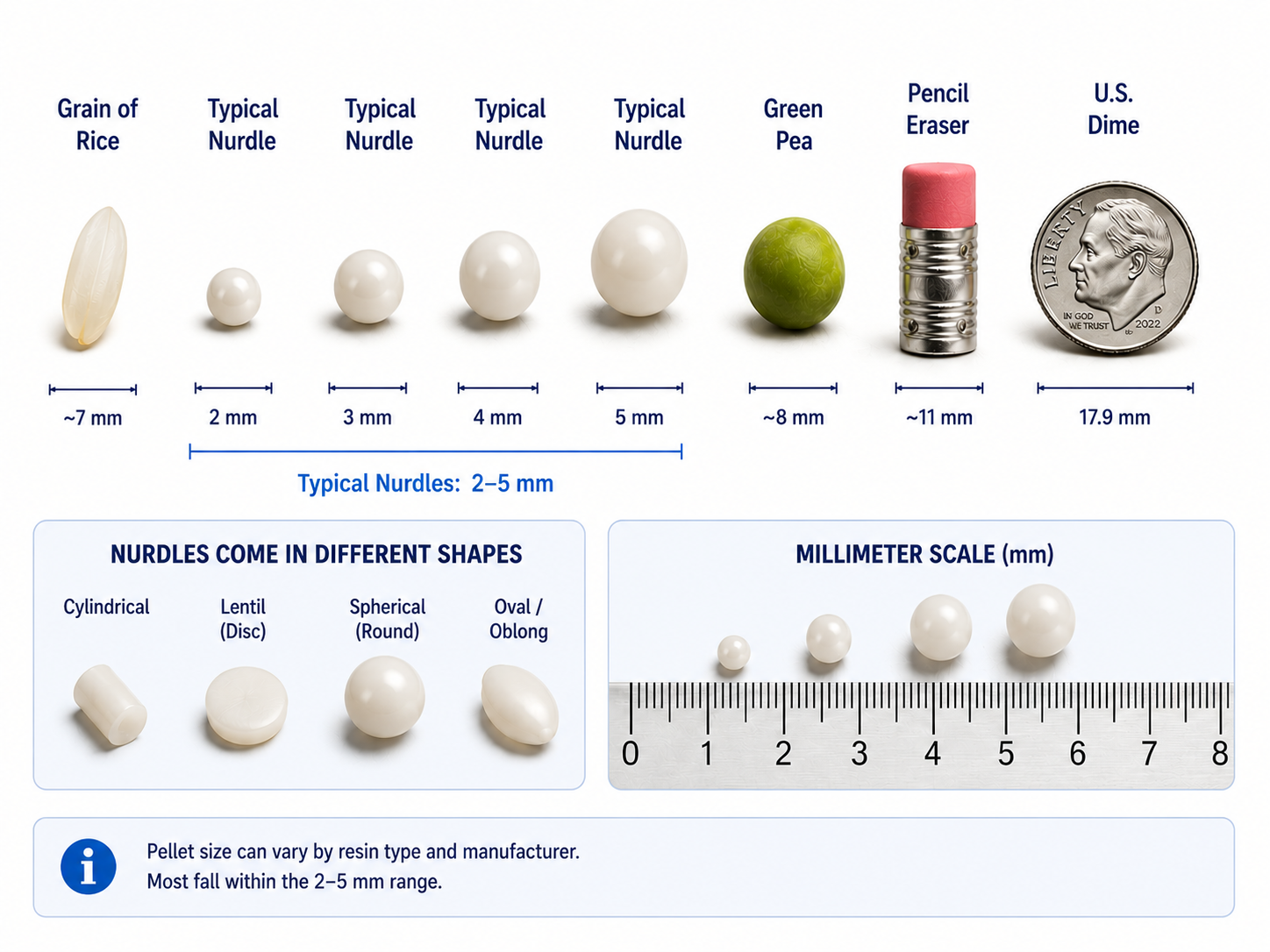
The resulting pellets are packaged in bags, supersacks, or octabins, or loaded in bulk into hopper railcars, tanker trucks, or marine shipping containers, and shipped to plastics processors and manufacturers around the world. Those processors then melt, mold, extrude, or otherwise transform the pellets into finished or semi-finished plastic products.
The Industrial Scale of Pellet Handling
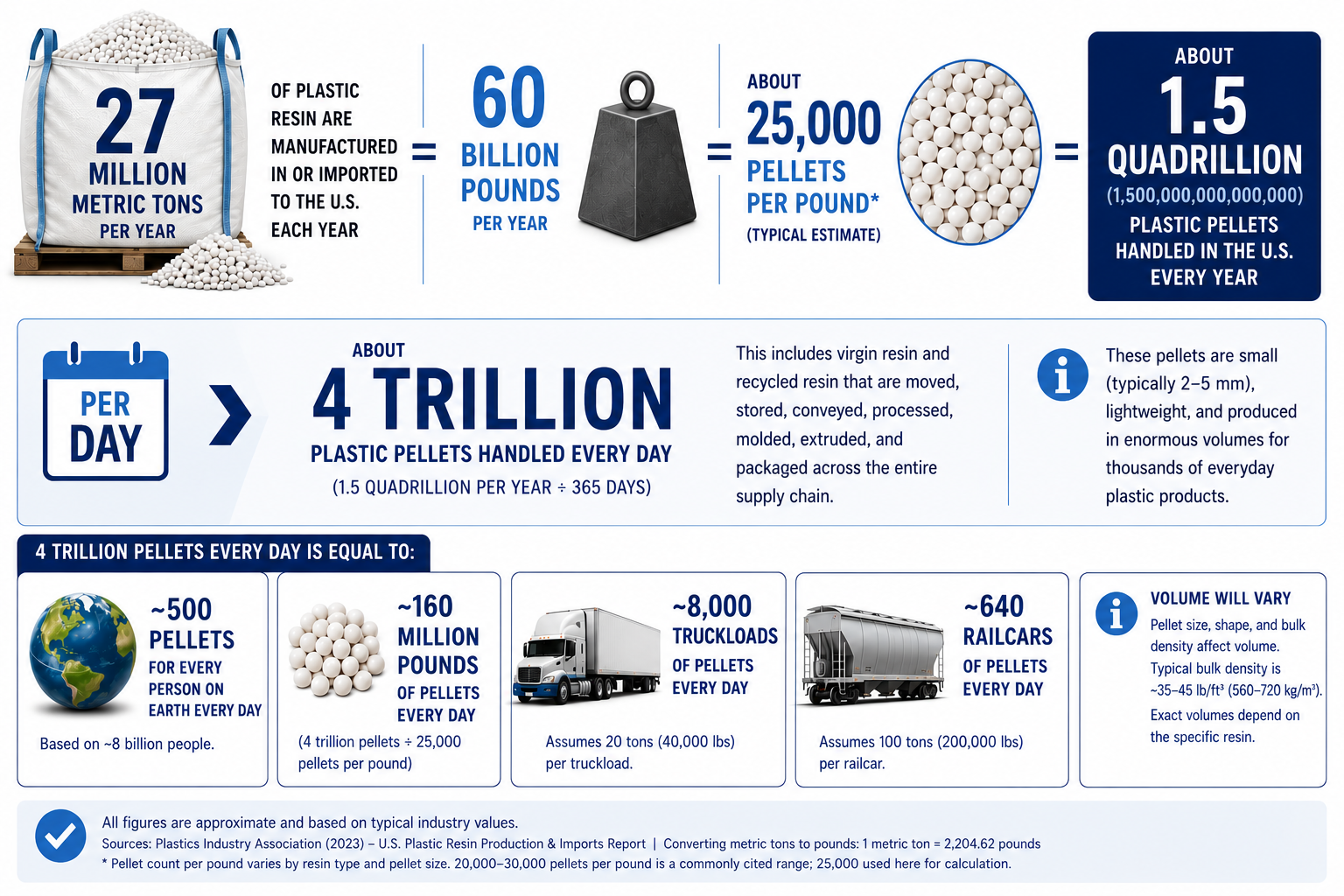
The scale at which plastic resin pellets are produced and moved globally is immense. The U.S. plastics industry alone employs over 1 million workers and contributes $520 billion to the economy (2025). Plastic resin is handled at thousands of facilities across the country, including resin production plants, compounding facilities, warehouses and distribution centers, transloading terminals, and plastics processing plants of all sizes. Each of these facilities receives, handles, stores, and ships pellets in quantities ranging from small bags to full railcar loads.
Throughout the supply chain, pellets move by bulk railcar, tanker truck, marine bulk vessel, and intermodal container. At each transfer point, whether loading, unloading, transloading, or simply moving bulk containers around a facility, there is the potential for pellet loss.
What Makes Nurdles an Environmental Concern?
The characteristics that make plastic resin pellets useful in manufacturing are the same characteristics that make them a persistent challenge once they escape into the environment.
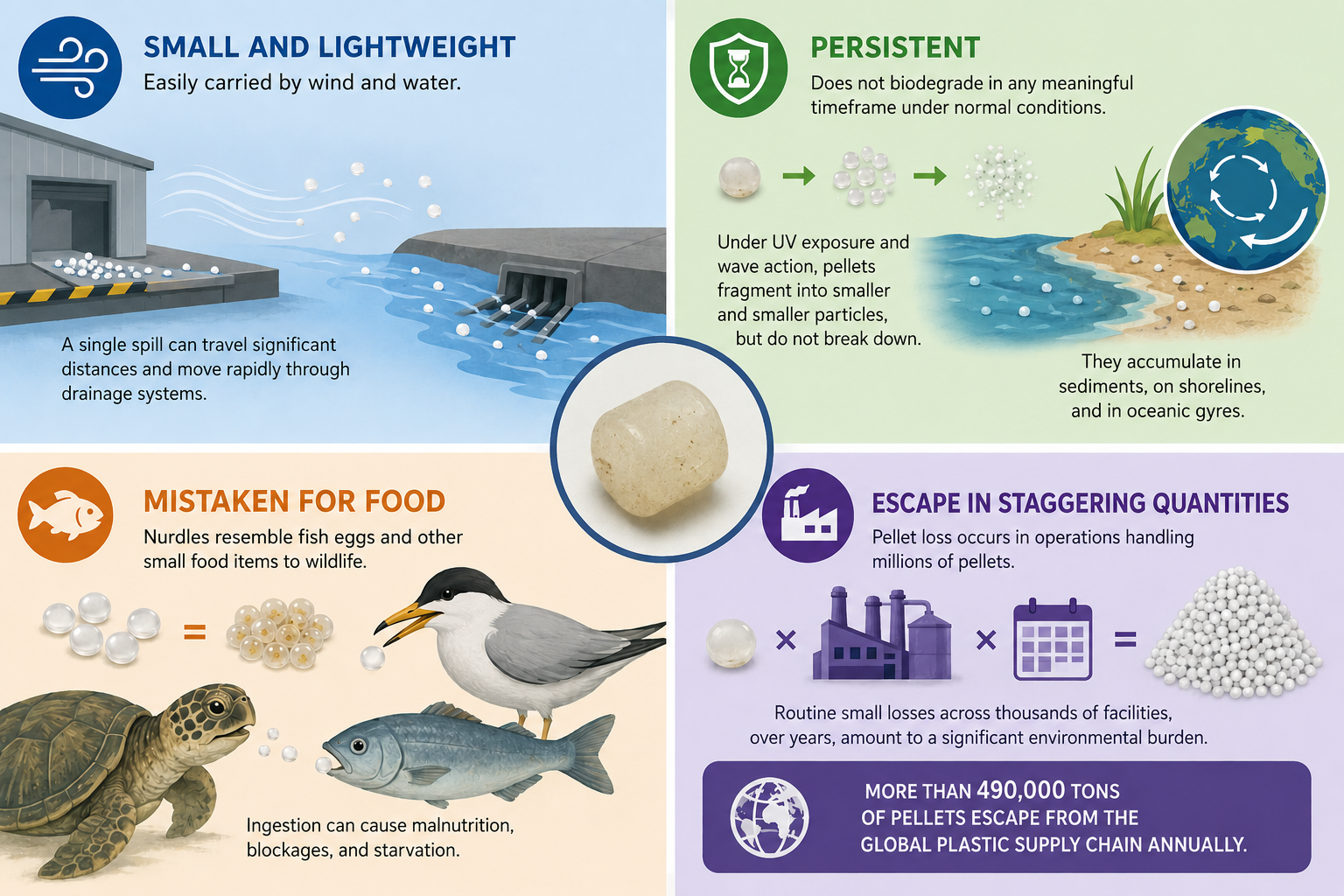
Nurdles are small and lightweight. Plastic pellets are easily carried by wind and water. A single spill on an open loading dock can result in pellets traveling significant distances before anyone registers the loss. Once airborne or caught in a water flow, pellets move rapidly through drainage systems.
Nudles are persistent. Plastic does not biodegrade in any meaningful timeframe under normal environmental conditions. Plastic resin pellets released into the environment today—whether polyethylene, polypropylene, or any other resin type—will remain there for a very long time. Under UV exposure and wave action, they gradually fragment into smaller and smaller particles, transitioning from microplastics to nanoplastics, but the plastic itself does not break down into harmless components. They accumulate in sediments, on shorelines, and in oceanic gyres.
Nurdles are mistaken for food. Nurdles closely resemble fish eggs and other small food items to a wide range of wildlife. Researchers have documented pellet ingestion across species, including seabirds, sea turtles, and fish. Because pellets often cannot pass through the digestive tracts of these animals, ingestion can cause malnutrition, blockages, and starvation.
Nurdles escape in staggering quantities. A single pellet is easy to overlook. But pellet loss at industrial facilities occurs in the context of operations handling millions of pellets at a time. The cumulative effect of routine small losses across thousands of facilities, over years, amounts to a significant environmental burden. Operation Clean Sweep® estimates that more than 490,000 tons of pellets escape from the global plastic supply chain annually.
Nurdles vs. Other Microplastics
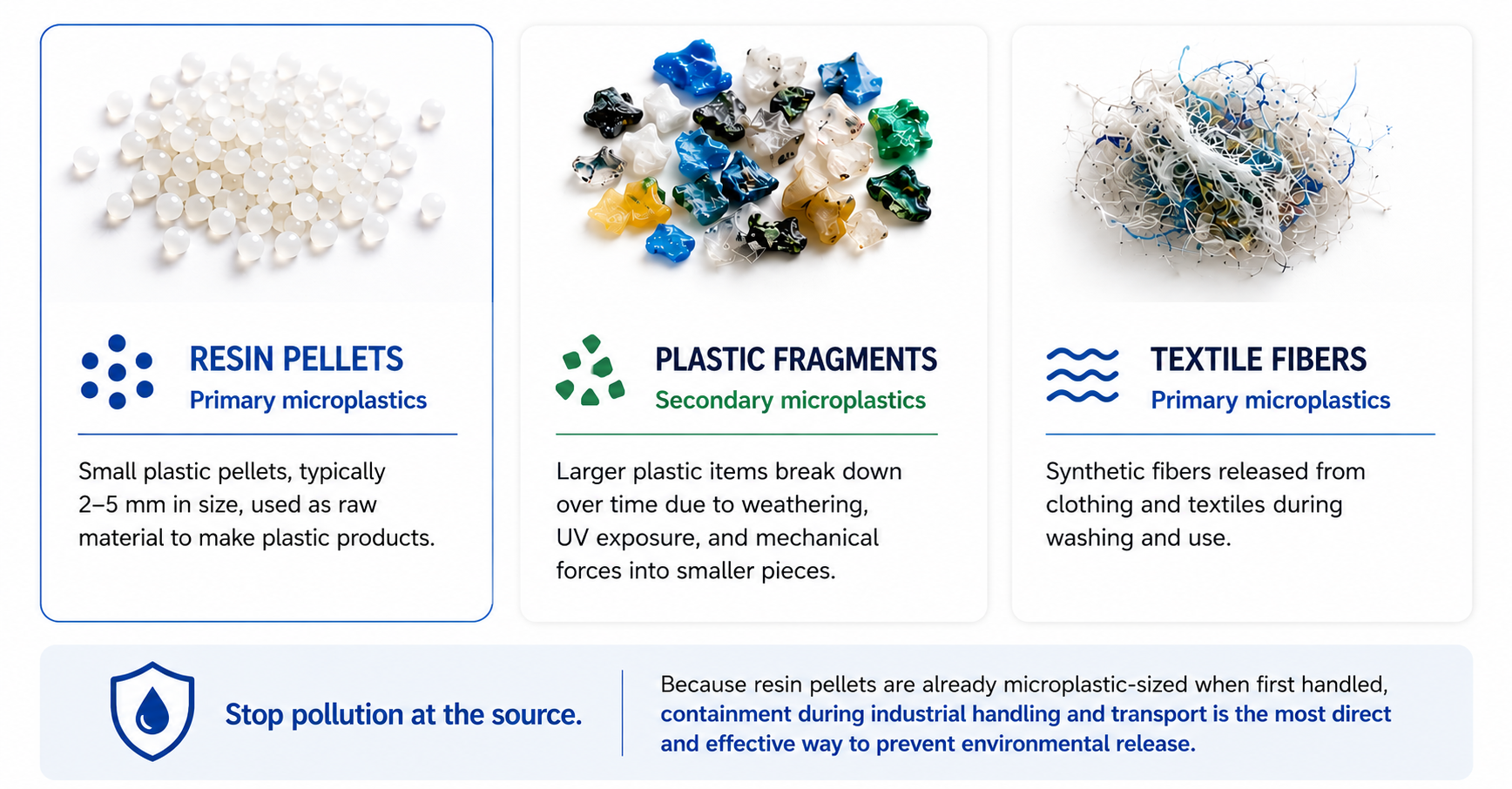
The term “microplastics” encompasses a broad category of small plastic particles in the environment, from fragments of degraded consumer products to synthetic textile fibers to industrial materials like nurdles. Within this broader category, plastic resin pellets occupy a distinct position: they are primary microplastics, meaning they enter the environment in their original manufactured form rather than as fragments of larger plastic items.
This distinction matters. Consumer plastic waste requires time to break down into microplastic fragments. Resin pellets are already microplastic-sized when they are first handled. Containment at the industrial source is therefore the most direct and effective intervention available, because there is no later stage at which pellet loss can be recaptured. Research estimates that plastic pellets are the second-largest direct source of microplastic pollution to the ocean by weight.
The Commitment to Zero Pellet Loss
Across the plastics supply chain, the goal is the same: zero pellet loss. It is achievable with the right procedures, the right employee training, and the right containment equipment at every point in the chain.
UltraTech International manufactures a full line of plastic-pellet leak and spill containment products specifically engineered to prevent plastic pellet escape at rail transfer sites, loading areas, storm drains, catch basins, and wherever else plastic resin pellets are handled.
Questions?
Let’s stop plastic pellet pollution together. If you have questions about any of our products, fill out the form below, and we’ll be in touch soon.